

Wednesday, April 8, 2026
Interview with Jazz Glastra and Dr. Matthew Johnson
An astounding 14% of all deaths worldwide are due to smoking.
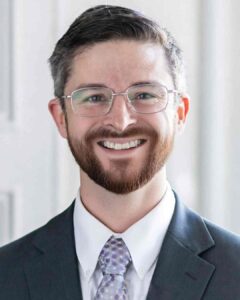
Dr. Matthew Johnson, Professor of Psychiatry and Behavioral Science at Johns Hopkins University, is the principal investigator on a new study that looks at the efficacy of psilocybin for smoking cessation. This is the largest psilocybin study yet for this indication, and the results were very encouraging. At six-month follow-up, 52% of the participants who received psilocybin plus cognitive behavioral therapy (CBT) were abstinent from smoking compared to only 25% of those who received a nicotine patch plus CBT.
In this interview with Dr. Johnson, BrainFutures’ Senior Director Jazz Glastra dives into this new research and what it might mean for the future of psychedelic science—and for smokers.
MJ: Nicotine alters dopamine transmission in the reward pathways. Over time it rewires the brain and upregulates nicotinic acetylcholine receptors, producing tolerance. This increases the rewarding properties of other aspects of the world while nicotine is in a person’s system. Without nicotine, one can then experience anhedonia, or a dull feeling where the world doesn’t feel as rewarding.
MJ: We can say most at the psychological level. It helps the same way it helps with cancer distress and depression. People experience a change in perspective, view themselves and their problems in a different way, and experience a change in priorities. We have much to confirm, but it may be that the neuroplastic effects seen in animal studies are at play in humans, and this might be expressed as increased susceptibility to learning in the days following psychedelic use. Long term, it might be the case that suboptimal brain network patterns caused by tobacco addiction are normalized.
MJ: I went with a comparative efficacy trial which is the gold standard in psychotherapy research: randomize people to this new thing versus an established method that is known to work. We did this in comparison to nicotine patch, which is one form of nicotine replacement therapy. I’ve published previous research showing that the vast majority of people in psychedelic trials cut through the blind, which means correctly guess if they got drug or placebo. So I applied the best standard for assessing a new psychotherapy, where blinding isn’t possible.
The data showed that people had much higher odds of quitting if they were randomized to the psilocybin group, despite the observation that success in the nicotine patch group compared favorably to previous studies with nicotine patch. Overall, the high abstinence rates stand out for me. A bit more than half of participants were not smoking 6 months after the quit attempt, which is higher than typically seen for tobacco addiction treatment.
MJ: We don’t know the degree to which placebo effects may have driven the treatment. That said, even in double blind psychedelic trials we don’t know the degree to which placebo effects may have driven the treatment. But we do know that there is a placebo effect for nicotine patch (in addition to real underlying efficacy), so at least there is placebo effect at play in both groups.
MJ: Yes, we are running an NIH-funded study right now of psilocybin for tobacco addiction, which is a blinded, placebo-controlled trial. We are using niacin as an active placebo. This has the limitations I mentioned, but there is not one perfect study design. What you want to see is that the effect holds up under different types of designs.
MJ: Psilocybin for tobacco addiction is not approved for treatment yet, but it looks promising. Hopefully, we’ll see psychedelic companies get interested in this area. I think it’s crazy that it’s been ignored in the psychedelic industry. Smoking cessation is a multibillion-dollar industry. Compared to depression studies (some of which I’ve conducted with colleagues), for tobacco we have biological confirmation of behavior change. Relatively speaking, this is much harder evidence, and I think points the way to broader behavior change efforts with psychedelics.
—
You can read the full article, “Psilocybin or Nicotine Patch for Smoking Cessation: A Pilot Randomized Clinical Trial,” in JAMA Network Open.
 ® 2026 BrainFutures All Rights Reserved.